
Australian Visa Refused? Here’s How and When to Apply Again
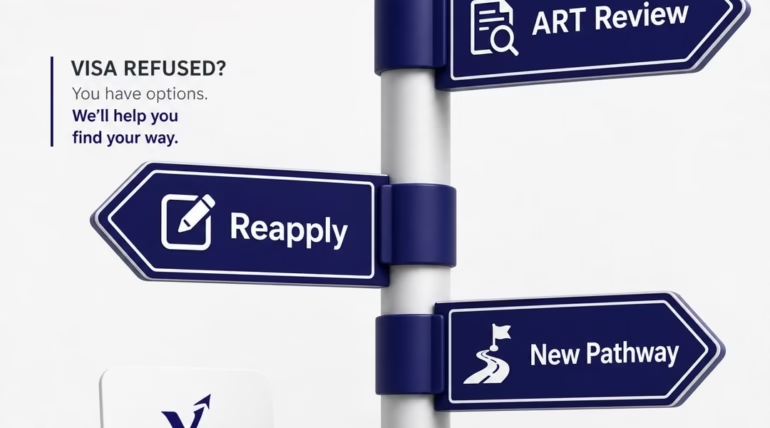
A visa refusal in Australia does not automatically close the door. In most cases you can apply again — sometimes immediately. But the gap between a reapplication that succeeds and one that collects a second refusal is almost always preparation, not eligibility. The Department of Home Affairs has a record of your immigration history. They will review your new application knowing you were previously refused. What they are looking for is genuine change — different evidence, different circumstances, or a fundamentally stronger case. Not the same file lodged again. This guide covers how reapplication works across all major visa categories, what the DHA expects to see, when reapplying is the right move versus appealing, and what the process looks like for the visa types most commonly refused in Australia. Is There a Waiting Period Before You Can Reapply? For most Australian visa types, there is no mandatory waiting period. You can lodge a new application the day after you receive your refusal notice. The exceptions matter, so check your letter carefully. PIC 4020 bar — three years. If the DHA found that you provided bogus documents or false or misleading information, a finding under Public Interest Criterion 4020 results in a three-year bar from being granted most Australian visas. This is not triggered by an honest error — it applies to deliberate misrepresentation. If a PIC 4020 bar has been imposed, reapplication is not available until it lifts, unless a waiver applies in very limited circumstances. Section 48 bar — onshore applicants only. If your visa was refused while you were in Australia (onshore), section 48 of the Migration Act may prevent you from applying for most substantive visas while you remain in the country. Whether this applies depends on your visa type and how the refusal was made. It does not apply to all onshore refusals, but it is one of the main reasons professional advice matters before lodging again. Character-based restrictions. Some refusals or cancellations under section 501 (the character test) can carry conditions that affect your ability to reapply. The details will be in your refusal letter. Outside these scenarios, no waiting period applies. The real question is not whether you can apply — it is whether your new application is genuinely stronger than the one that was refused. Reapply or Appeal — Which Path Is Right? Before lodging a new application, the first decision is whether reapplication is even the right move. For some refusals, an Administrative Review Tribunal (ART) appeal is a stronger option. For others, reapplication wins on speed and cost. And for some, both are available — which is its own decision. Reapplying tends to be the better option when: Your visa type does not carry ART review rights (most offshore visitor visa refusals, for example) The refusal was caused by a clear evidentiary gap you can now fill — updated financial documents, corrected forms, a stronger GTE or GS statement Your circumstances have genuinely changed since the original application The ART review timeline (median 18 months) and fee ($3,580) make it impractical relative to the visa at stake Pursuing an ART appeal tends to be the better option when: Your decision is a reviewable migration decision (your refusal letter will state this) The DHA’s reasoning appears to contain an error of fact or a procedural fairness issue Reapplication is restricted by a Section 48 bar and you cannot leave Australia to lodge offshore The visa type is high-stakes — partner visa, employer-sponsored visa, permanent residency — where merits review gives you the most complete opportunity to present your case In some situations the right answer is to lodge an ART review within the deadline to preserve your review rights, and then assess whether to pursue it fully or pivot to reapplication once you have received the DHA’s review file. Missing the deadline removes that flexibility entirely. For the full ART appeal process — deadlines, fees, hearing procedures, and outcomes by visa type, see: How to appeal a visa decision step by step The Foundation: What Every Strong Reapplication Requires Regardless of which visa type was refused, every successful reapplication shares the same underlying structure. The DHA is not impressed by volume — it is looking for a case that is specific, consistent, and directly responsive to the concerns that caused the original refusal. Start with the refusal letter — and take every word of it literally. Your decision record is the most valuable document you now hold. It tells you precisely which criteria were not met and, in most cases, why the delegate was not satisfied. The language is deliberate: “the delegate was not satisfied that…” signals exactly what evidence was absent or unconvincing. That language is your brief for the new application. Address every stated reason — not just the most obvious one. If your refusal letter identifies three concerns, a reapplication that only fixes two will produce the same result. Every ground of refusal must be met with targeted, specific evidence. Ensure complete internal consistency. Every document in your application must tell the same story. Names, dates, employment history, salary figures, and stated intentions must align across every document without exception. Inconsistencies — even minor ones — undermine the credibility of the entire file. Disclose the previous refusal — and address it directly. Every Australian visa application requires disclosure of prior refusals. This is a legal obligation. Rather than treating it as a liability, use it as a structured opportunity: briefly explain what caused the previous refusal and specifically what has changed since. A well-addressed prior refusal is materially less damaging than an unexplained one. Submit only genuine, unaltered documents. A second refusal combined with a PIC 4020 finding produces consequences far more serious than the original refusal. Every document must be verifiable and unaltered. How to Reapply: By Visa Type The reapplication process shares universal principles, but the specific evidence requirements and common failure points differ by visa category. Here is how they break down for the most